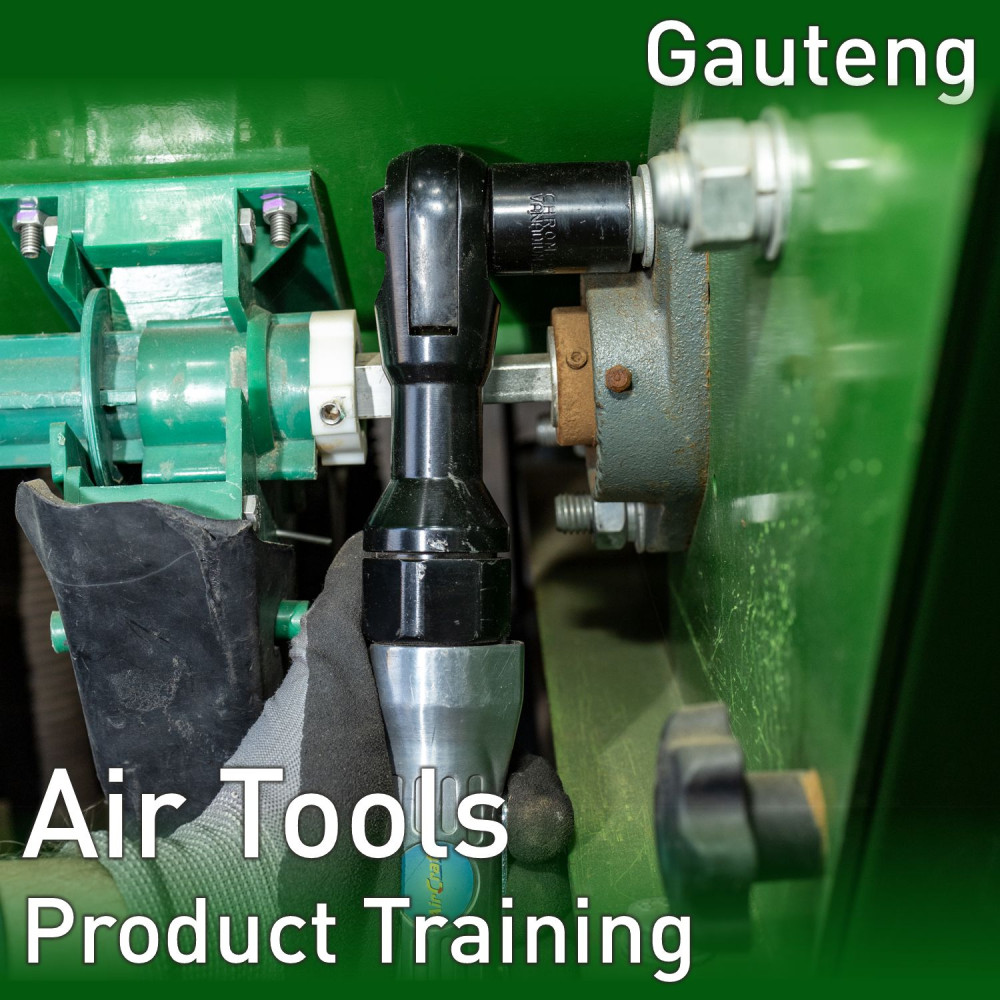
Air Tools Training - Gauteng
Objective
To help customers understand the correct selection, safe operation, and maintenance of air tools and pneumatic systems for professional, industrial, workshop, and DIY applications. This training focuses on improving efficiency, productivity, tool lifespan, and workplace safety.
1. Introduction to Air Tools & Pneumatics:
Air tools, also known as pneumatic tools, use compressed air to operate. They are widely used in automotive, construction, manufacturing, woodworking, and industrial environments due to their power, reliability, and durability.
Benefits of Air Tools
- High power-to-weight ratio
- Consistent performance
- Reduced motor overheating
- Long service life
- Suitable for continuous operation
2. Understanding Pneumatic Systems:
When selecting a measuring tool, considerA pneumatic system typically consists of:
- Air Compressor – generates compressed air
- Air Hose – delivers airflow to the tool
- Couplers & Fittings – connect the system components
- Regulators & Filters – control pressure and remove moisture
- Lubricators – maintain tool performance and reduce wear
Understanding the complete system helps ensure optimal tool performance and reliability.
3. Common Types of Air Tools:
Impact Wrenches
Used for high-torque fastening and loosening applications.
Common in automotive and industrial workshops.
Air Ratchets
Ideal for fast assembly and confined spaces.
Die Grinders & Air Grinders
Used for grinding, polishing, deburring, and shaping materials.
Air Sanders
Suitable for woodworking, bodywork, and finishing applications.
Spray Guns
Used for painting, coatings, and finishing work.
Nailers & Staplers
Common in woodworking, furniture manufacturing, roofing, and construction.
Air Drills
Used for repetitive drilling tasks in workshops and production environments.
Blow Guns
Used for cleaning equipment, surfaces, and work areas.
4. Choosing the Right Air Tool:
When selecting an air tool, customers should consider:
- The intended application
- Required torque or power
- Air consumption (CFM/LPM)
- Operating pressure (PSI/bar)
- Compressor compatibility
- Frequency of use
- Ergonomics and comfort
Matching the correct compressor and airflow requirements to the tool is essential for proper performance.

5. Compressor Basics:
Important Compressor Factors
- Tank Size – affects air storage capacity
- Airflow (CFM/LPM) – determines tool compatibility
- Pressure Rating (PSI/bar) – affects tool operation
- Duty Cycle – indicates continuous use capability
Using an undersized compressor may lead to poor performance and excessive wear.
6. Air Pressure & Airflow Management:
Correct air pressure is critical:
- Too much pressure may damage tools or reduce their lifespan
- Too little pressure reduces performance
Proper hose diameter and fitting quality also affect airflow efficiency.
7. Safe Operation of Air Tools:
Important Safety Guidelines:
- Always wear appropriate PPE:
- Safety glasses
- Hearing protection
- Gloves where required
- Disconnect air supply before changing accessories
- Never point compressed air at people
- Inspect hoses and fittings for damage or leaks
- Ensure accessories are securely attached
- Use the correct pressure settings for the tool
8. Common Mistakes to Avoid:
Proper maintenance significantly increases tool lifespan.
Daily Maintenance:
- Drain moisture from compressor tanks
- Lubricate pneumatic tools where required
- Keep air filters clean
- Inspect hoses and couplers regularly
General Care:
- Store tools in a clean, dry environment
- Replace worn seals and fittings
- Avoid dirt and moisture from entering the air system
9. Common Problems & Troubleshooting
Low Tool Power:
Possible causes
- Low air pressure
- Restricted airflow
- Undersized compressor
- Dirty filters or hoses
Excessive Moisture:
Can cause
- Internal corrosion
- Reduced performance
- Poor spray finishes
Solution
- Use water separators and drain tanks regularly.
Air leaks:
- Check couplers, fittings, and hoses
- Replace worn seals immediately
10. Understanding Air Tool Quality
Professional-grade air tools often provide:
- Higher durability
- Better torque consistency
- Reduced vibration
- Improved ergonomics
- Longer service intervals
Investing in quality pneumatic equipment improves productivity and reduces downtime.
11. Vermont Sales Product Guidance
Vermont Sales offers a wide range of air tools and pneumatic accessories suitable for:
- Automotive workshops
- Industrial maintenance
- Construction and manufacturing
- Woodworking and furniture production
- DIY and home workshops
Our team can assist customers with:
- Compressor and tool matching
- Air system setup advice
- Accessory recommendations
- Maintenance guidance
12. Outcome
After this guidance, customers will:
- Understand the basics of pneumatic systems and air tools
- Select the correct air tool and compressor combination
- Operate pneumatic tools safely and efficiently
- Maintain tools and compressors correctly
- Improve productivity and extend equipment lifespan
- Make informed purchasing decisions for their applications
| Event Type | Training_course |
|---|---|
| Organiser Name | Mbalenhle Maroka |
| Organiser Email | mbalenhlem@vermontsales.co.za |
| Organiser Telephone | 0113147711 |
| Dates | 2025-08-05 09:00:00 - 2027-08-05 15:00:00 |
| Class/Event Length | 6 Hours |
| Location | 192 Tsessebe Crescent Midrand Gauteng South Africa -25.949700022046105 , 28.140760817554153 |
| Seats available | 13 |
Available Options
Disclaimer: Please ensure that you have read and understood the terms and condition associated with this event. Please access the terms here