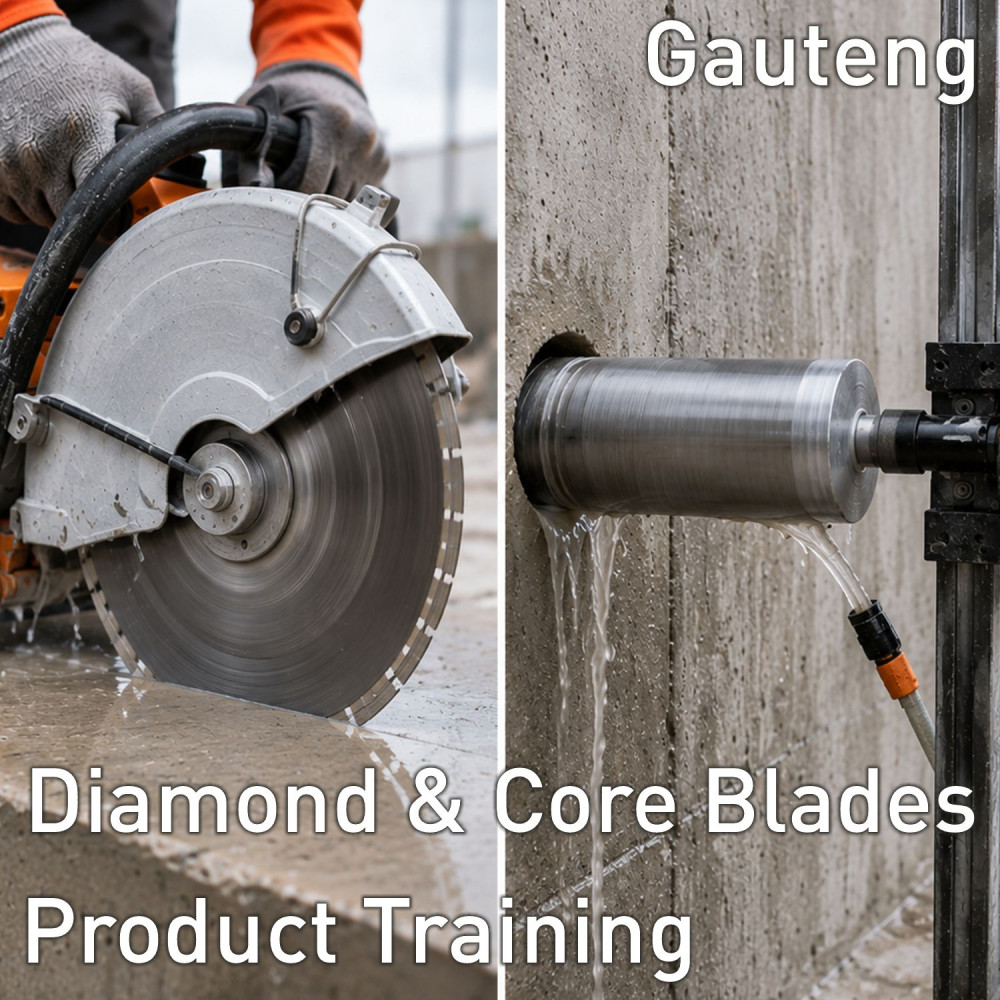
To help customers understand the correct selection, safe use, and maintenance of diamond blades and core drilling tools for construction, masonry, tiling, concrete cutting, and industrial applications. This training focuses on improving cutting performance, blade lifespan, safety, and application efficiency.
1. Introduction to Diamond & Core Blades:
Diamond blades and core drilling accessories are designed for cutting and drilling hard materials such as:
Concrete
Reinforced concrete
Tiles and porcelain
Granite and natural stone
Asphalt and abrasive materials
2. Understanding Diamond Blades:
Main components:
Steel core Provides strength and stability during cutting.
Diamond Segments Contain industrial diamonds and bonding material that perform the cutting action.
Bond (Matrix) Controls how quickly new diamonds are exposed during cutting.
Gullets & Slots Assist with cooling, debris removal, and vibration reduction.
3. Types of Diamond Blades:
Segmented Blades:
Fast, aggressive cutting
Ideal for concrete, brick, pavers, and masonry
Best suited for dry cutting applications
Turbo Blades:
Faster and smoother cutting
Suitable for concrete, stone, and general-purpose cutting
Better balance between speed and finish quality
Continuous Rim Blades:
Smooth, less chipping, cutting
Designed for tiles, porcelain, ceramics, and delicate materials
Primarily used with water cooling
4. Understanding Core Drilling:
Core drilling is used to create precise circular holes in hard materials.
Common Applications:
Plumbing installations
Electrical conduit installations
Air-conditioning pipework
Anchor installations
Concrete sampling
5. Types of Core Bits:
Dry Core Bits:
Designed for dry drilling in masonry and brick
Wet Core Bits:
Used with water cooling
Suitable for reinforced concrete and heavy-duty applications
Provides cleaner holes and longer bit life
6. Choosing the Correct Blade or Core Bit:
Customers should consider:
Material being cut or drilled
Wet or dry application
Machine compatibility
Blade diameter and arbor size
Required cut quality
Cutting speed vs finish quality
Frequency of use
Selecting the correct bond hardness is critical:
Soft bond → hard materials
Hard bond → abrasive materials
7. Wet vs Dry Cutting
Dry cutting:
Faster setup and portability
Requires intermittent cutting to avoid overheating
Common for masonry and concrete work
Wet cutting:
Reduces dust and heat buildup
Improves cut quality
Extends the blade and core bit lifespan
Essential for porcelain, granite, and reinforced concrete
8. Safe Operating Practices
Important Safety Guidelines
Always wear PPE:
Safety glasses
Hearing protection
Dust masks or respirators
Gloves
Check blades for damage before use
Ensure correct rotation direction during installation
Never exceed maximum RPM ratings
Allow blades to reach full speed before cutting
Avoid twisting or side-loading the blade
Secure workpieces properly before cutting or drilling
9. Cutting & Drilling Best Practices
Let the blade do the work—avoid excessive pressure
Maintain consistent feed pressure
Use water where recommended
Avoid overheating by allowing cooling periods during dry cutting
Keep blades straight during cuts to reduce wear and vibration
10. Maintenance & Care
Diamond Blades
Keep blades clean and dry
Avoid impacts or dropping
Dress glazed blades using abrasive material if cutting slows
Core Bits
Clean debris from segments after use
Inspect for worn or damaged segments
Store properly to prevent corrosion and damage
11. Common Problems & Troubleshooting
Blade glazing
Symptoms:
Blade spins but cuts slowly
Cause:
Bond too hard for the material
Solution:
Dress the blade using abrasive material
Excessive wear
Possible causes
Incorrect bond type
Excessive pressure
Wrong application
Chipping
Possible causes
Incorrect blade type
Cutting too quickly
Lack of water cooling
Core Bit Overheating
Possible causes
Insufficient cooling
Excessive pressure
Incorrect RPM
12. Understanding Product Quality
Professional-grade diamond products typically provide:
Faster cutting
Longer lifespan
Better segment retention
Improved safety
Reduced vibration and noise
Higher-quality blades and core bits reduce downtime and improve productivity.
13. Vermont Sales Product Guidance
Vermont Sales offers a wide range of:
Diamond cutting blades
Tile blades
Turbo and segmented blades
Core drilling systems and accessories
Professional and DIY cutting solutions
Our team can assist customers with:
Material-specific blade selection
Machine compatibility advice
Wet vs dry cutting recommendations
Productivity and performance solutions
14. Training Outcome
After completing this overview, customers will:
Understand the different types of diamond blades and core bits
Select the correct product for their application
Operate cutting and drilling equipment safely
Improve cutting efficiency and accuracy
Extend blade and core bit lifespan through proper usage and maintenance
Make informed purchasing decisions based on performance and application needs
Event Type
Training_course
Organiser Name
Mbalenhle Maroka
Organiser Email
mbalenhlem@vermontsales.co.za
Organiser Telephone
0113147711
Dates
2026-08-04 09:00:00 - 2026-08-04 15:00:00
Class/Event Length
6 Hours
Location
192 Tsessebe Crescent Midrand Gauteng South Africa -25.949700022046105 , 28.140760817554153